
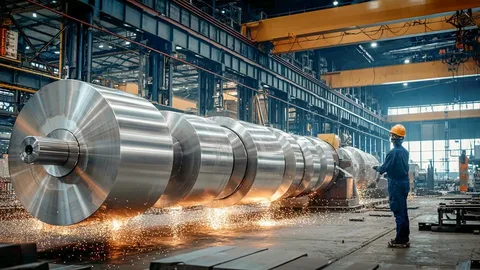
In today’s highly competitive transportation and logistics sector, the demand for stronger, safer, and more efficient heavy trucks continues to grow. One of the most important technologies driving this evolution is cnc machining for the heavy truck industry, which enables manufacturers to achieve exceptional precision, consistency, and durability in critical components. From engine parts to chassis systems, CNC (Computer Numerical Control) machining has become a cornerstone of modern heavy truck production.
As heavy-duty vehicles operate under extreme loads and harsh environments, even minor manufacturing imperfections can lead to performance issues or safety risks. CNC machining helps eliminate these concerns by offering highly accurate, computer-controlled manufacturing processes that ensure every part meets strict engineering standards.
Role of CNC Machining in Heavy Truck Manufacturing
The foundation of modern truck production relies heavily on cnc machining for the heavy truck industry, which provides unmatched accuracy in shaping complex metal parts. CNC machines follow programmed instructions to cut, drill, and shape materials with minimal human intervention, ensuring consistency across large production runs.
This level of precision is especially important in heavy truck manufacturing, where components such as transmission gears, brake systems, and suspension parts must fit together perfectly. Even the smallest deviation can affect vehicle performance, fuel efficiency, and safety.
Beyond precision, CNC machining also allows manufacturers to scale production efficiently. Once a design is programmed, it can be reproduced repeatedly without losing quality, making it ideal for mass production of heavy truck components.
Additionally, CNC technology supports faster prototyping, enabling engineers to test and refine designs quickly before full-scale manufacturing begins. This reduces development time and accelerates innovation in the trucking industry.
Enhancing Precision and Durability of Truck Components
One of the biggest advantages of cnc machining for the heavy truck industry is its ability to produce highly durable components that withstand extreme operational stress. Heavy trucks often carry massive loads over long distances, requiring parts that can endure constant vibration, pressure, and temperature changes.
CNC machining ensures that each component is manufactured with exact specifications, reducing the risk of weak points or structural failures. This precision directly contributes to longer-lasting truck parts and reduced maintenance costs for fleet operators.
Durability is further enhanced by the ability of CNC machines to work with high-strength materials such as hardened steel, titanium alloys, and specialized composites. These materials are essential for critical truck systems like axles, engine blocks, and drivetrain components.
As a result, manufacturers can produce parts that not only meet industry safety standards but often exceed them. This improves overall vehicle reliability and extends the operational lifespan of heavy trucks.
Improving Production Efficiency and Supply Chain Reliability
Efficiency is a key concern in the automotive and logistics sectors, and cnc machining for the heavy truck industry plays a major role in streamlining production processes. By automating complex manufacturing tasks, CNC systems significantly reduce manual labor requirements and production errors.
This automation allows factories to operate with greater speed and consistency, ensuring that truck manufacturers can meet tight delivery schedules and high market demand. It also reduces downtime caused by human error or rework.
From a supply chain perspective, CNC machining improves reliability by standardizing component production across multiple facilities. Parts manufactured in different locations can still maintain identical quality and specifications.
This consistency is crucial for global truck manufacturers who rely on distributed production networks. It ensures that assembly lines remain uninterrupted and that replacement parts are always compatible and readily available.
Advanced Materials and Complex Part Manufacturing
Modern heavy trucks require components made from advanced materials that offer strength without excessive weight. cnc machining for the heavy truck industry makes it possible to work with these materials efficiently, including high-performance alloys and engineered composites.
These materials are often difficult to machine using traditional methods, but CNC systems provide the precision and control needed to shape them accurately. This enables manufacturers to design lighter yet stronger components, improving fuel efficiency and load capacity.
CNC machining also excels in producing highly complex geometries that would be nearly impossible to achieve manually. This includes intricate engine parts, custom housings, and precision-fitted mechanical assemblies.
By enabling complex part production, CNC technology supports innovation in truck design, allowing engineers to push the boundaries of performance, aerodynamics, and structural integrity.
Future Trends in CNC Machining for Heavy Truck Industry
The future of cnc machining for the heavy truck industry is closely linked to advancements in automation, artificial intelligence, and smart manufacturing systems sharepoint intranet sydney. CNC machines are becoming increasingly integrated with digital technologies that allow real-time monitoring and adaptive control.
This means manufacturers can detect errors instantly, optimize machining processes automatically, and reduce material waste. As a result, production becomes more efficient and environmentally sustainable.
Another emerging trend is the integration of CNC machining with Industry 4.0 technologies, including IoT (Internet of Things) sensors and cloud-based data systems. These innovations allow factories to operate as connected ecosystems where machines communicate and optimize performance collectively.
In the coming years, we can also expect greater use of hybrid manufacturing systems that combine CNC machining with additive manufacturing (3D printing). This will open new possibilities for producing even more complex and customized heavy truck components.
Conclusion
In conclusion, cnc machining for the heavy truck industry has become an essential technology driving innovation, precision, and efficiency in modern vehicle manufacturing. Its ability to produce highly accurate, durable, and complex components ensures that heavy trucks meet the demanding requirements of today’s transportation sector.
As technology continues to evolve, CNC machining will play an even greater role in shaping the future of heavy truck design and production. With advancements in automation, materials, and digital integration, the industry is set to achieve new levels of performance, safety, and sustainability.














Leave a Reply