
Energy failures in businesses are more common than many organizations realize, and their impact can be immediate and severe. From small companies to large industries, power disruptions can interrupt operations, damage equipment, and compromise productivity in a matter of minutes.
In today’s highly connected and technology-driven environment, businesses rely heavily on stable energy supply to maintain their daily activities. Even a short outage can lead to significant financial losses and operational setbacks.
According to a report by International Energy Agency, power interruptions cost businesses billions annually worldwide, highlighting how critical energy reliability has become for modern operations.
Therefore, understanding the causes and consequences of energy failures in businesses is essential for companies looking to protect their assets and ensure continuity.
The Real Financial Impact of Energy Failures
One of the most immediate consequences of energy failures in businesses is financial loss. When operations stop, revenue generation is directly affected, especially in sectors that depend on continuous production or service delivery.
Additionally, companies may face unexpected costs related to equipment damage, data loss, and system recovery. Sensitive machinery and IT infrastructure are particularly vulnerable during sudden outages.
Downtime can also affect employee productivity. Teams are forced to halt their activities, creating delays that may impact deadlines and overall performance.
As a result, the true cost of energy failures in businesses often goes far beyond the initial interruption.
Operational Disruptions and Productivity Loss
Energy failures in businesses create operational chaos, especially for companies with complex workflows. Manufacturing lines stop, digital systems go offline, and communication channels become unreliable.
This disruption affects not only internal processes but also customer relationships. Delays in service or delivery can lead to dissatisfaction and loss of trust.
Moreover, restarting operations after an outage is not always immediate. Systems may require time to reboot, recalibrate, or even repair, extending the downtime further.
Consequently, operational instability becomes a major risk for businesses without proper energy backup solutions.
Backup Power Solutions as a Strategic Investment
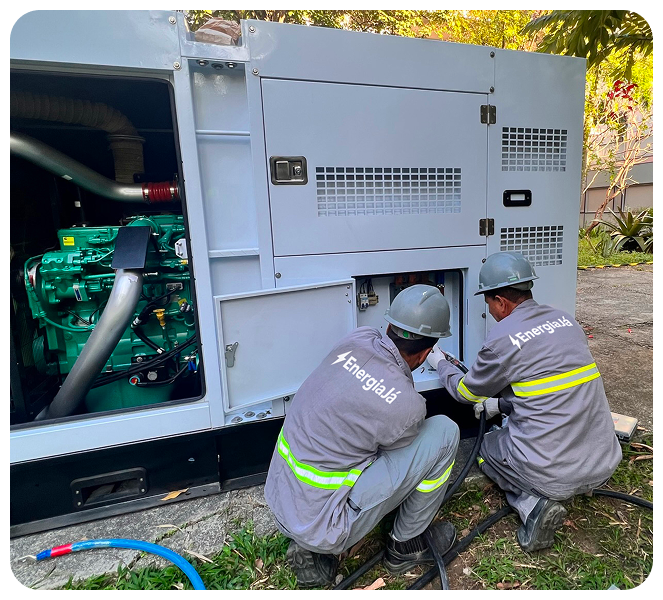
To mitigate the risks of energy failures in businesses, many companies are investing in backup power systems. These solutions ensure continuity even during unexpected outages.
Options like aluguel de geradores de energia have become increasingly popular, especially for businesses that need flexible and cost-effective solutions without large upfront investments.
Backup generators can automatically activate during a power outage, keeping essential operations running and minimizing downtime.
Therefore, investing in backup power is no longer optional—it is a strategic necessity in modern business environments.
The Role of Infrastructure and Energy Planning
Preventing energy failures in businesses also involves proper infrastructure planning. Companies must evaluate their energy needs and ensure their systems can handle peak demand.
In this context, solutions like aluguel de transformadores play a critical role in maintaining energy stability, especially in large-scale operations or temporary projects.
A well-designed energy infrastructure reduces the risk of overloads, voltage fluctuations, and unexpected failures.
As a result, businesses that prioritize energy planning are better prepared to handle challenges and maintain consistent performance.
Preventive Strategies to Avoid Energy Failures
Beyond backup systems, companies should adopt preventive measures to reduce the likelihood of energy failures in businesses. Regular maintenance of electrical systems is essential to identify potential issues before they escalate.
Monitoring energy consumption and system performance can also help detect anomalies and prevent failures. Smart technologies and automation tools are increasingly being used for this purpose.
Additionally, having a contingency plan ensures that teams know how to respond quickly in case of an outage, minimizing disruption.
Ultimately, prevention is always more efficient and cost-effective than dealing with the consequences of energy failures.
Protecting Your Business from Energy Disruptions
Energy failures in businesses are not just technical issues—they are strategic risks that can impact financial performance, operations, and reputation. As reliance on technology continues to grow, the importance of energy stability becomes even more critical.
Companies that invest in backup solutions, infrastructure planning, and preventive strategies are better equipped to handle unexpected disruptions and maintain continuity.
In a competitive market, ensuring a reliable energy supply is not just about avoiding losses—it is about securing long-term success and resilience.











Leave a Reply