
Customer preferences are no longer static. Today’s shoppers constantly discover new products, explore different categories, adopt emerging trends, and adjust their purchasing behavior based on changing needs, lifestyles, and market influences. A customer who frequently purchased fitness equipment last year may now be shopping for home décor, while a loyal buyer of one brand may begin exploring alternatives due to changing tastes or priorities.
This evolution presents a major challenge for retailers. Traditional personalization strategies often rely heavily on historical customer behavior, assuming that past purchases and preferences will continue to predict future actions. While historical data remains valuable, it may not always reflect a customer’s current interests or future intent.
To remain relevant, retailers must continuously adapt to changing customer preferences. Ecommerce personalization has therefore evolved beyond static segmentation and historical analysis. Modern personalization strategies leverage real-time behavioral signals, artificial intelligence (AI), machine learning, predictive analytics, and customer data platforms (CDPs) to understand how customer interests are changing and respond accordingly.
By recognizing and adapting to evolving shopping preferences, retailers can create more relevant experiences, improve engagement, strengthen customer loyalty, and drive long-term revenue growth.
Why Customer Preferences Change
Consumer behavior is influenced by numerous factors that can alter purchasing patterns over time.
These include:
- Lifestyle changes
- Seasonal needs
- Economic conditions
- Family circumstances
- Product trends
- Social media influence
- New product introductions
As a result, customer interests rarely remain fixed.
Retailers that fail to recognize these shifts risk delivering irrelevant experiences that reduce engagement and conversion opportunities.
The Limitations of Static Personalization
Traditional personalization often depends on:
- Historical purchases
- Demographic segments
- Fixed customer profiles
- Long-term behavioral trends
While useful, these approaches can become outdated when customer interests evolve.
Common challenges include:
Outdated Recommendations
Customers continue receiving suggestions based on past interests.
Missed Discovery Opportunities
New preferences remain undetected.
Reduced Relevance
Experiences no longer align with current needs.
Lower Engagement
Customers interact less with irrelevant content and offers.
These limitations highlight the need for more adaptive personalization strategies.
Understanding Ecommerce Personalization
Ecommerce personalization involves tailoring shopping experiences based on customer behavior, preferences, context, and intent.
Personalization can influence:
- Product recommendations
- Search results
- Category pages
- Promotional offers
- Website content
- Email communications
The objective is to deliver experiences that feel relevant to each customer at every interaction.
Why Adaptability Is Critical in Modern Personalization
Personalization is most effective when it reflects current customer interests rather than relying solely on historical data.
Adaptable personalization helps retailers:
- Detect preference changes early
- Respond to new customer interests
- Improve relevance
- Support product discovery
This creates more dynamic and engaging shopping experiences.
How Ecommerce Personalization Adapts to Evolving Shopping Preferences
Leveraging Real-Time Behavioral Signals
Real-time behavior provides immediate insight into changing customer interests.
Important signals include:
- Product views
- Search activity
- Category browsing
- Cart additions
- Wishlist behavior
These interactions often reveal emerging preferences before purchases occur.
Modern personalization systems continuously analyze these signals to adjust experiences dynamically.
Moving Beyond Historical Purchases
Past purchases remain valuable but should not dominate personalization decisions.
For example:
A customer who previously purchased baby products may later shift interest toward children’s educational products.
Modern personalization systems combine historical data with current behavior to create more balanced recommendations.
This improves relevance as preferences evolve.
Monitoring Product Exploration Patterns
Customers often signal changing interests through exploration behavior.
Examples include:
- Visiting new categories
- Searching for unfamiliar products
- Engaging with different brands
These actions provide early indicators of preference shifts.
Personalization engines use these signals to update recommendations and content experiences.
Using AI to Detect Emerging Interests
Artificial intelligence plays a critical role in identifying preference changes.
AI-powered systems can analyze:
- Browsing behavior
- Search patterns
- Purchase activity
- Engagement history
Machine learning models detect subtle changes that may not be visible through traditional analysis.
This enables retailers to respond proactively.
Personalizing Product Recommendations
Recommendation engines are one of the most important tools for adapting to evolving preferences.
Modern recommendation systems consider:
- Current interests
- Recent interactions
- Product affinity
- Customer intent
Recommendations automatically evolve as customer behavior changes.
This keeps discovery experiences fresh and relevant.
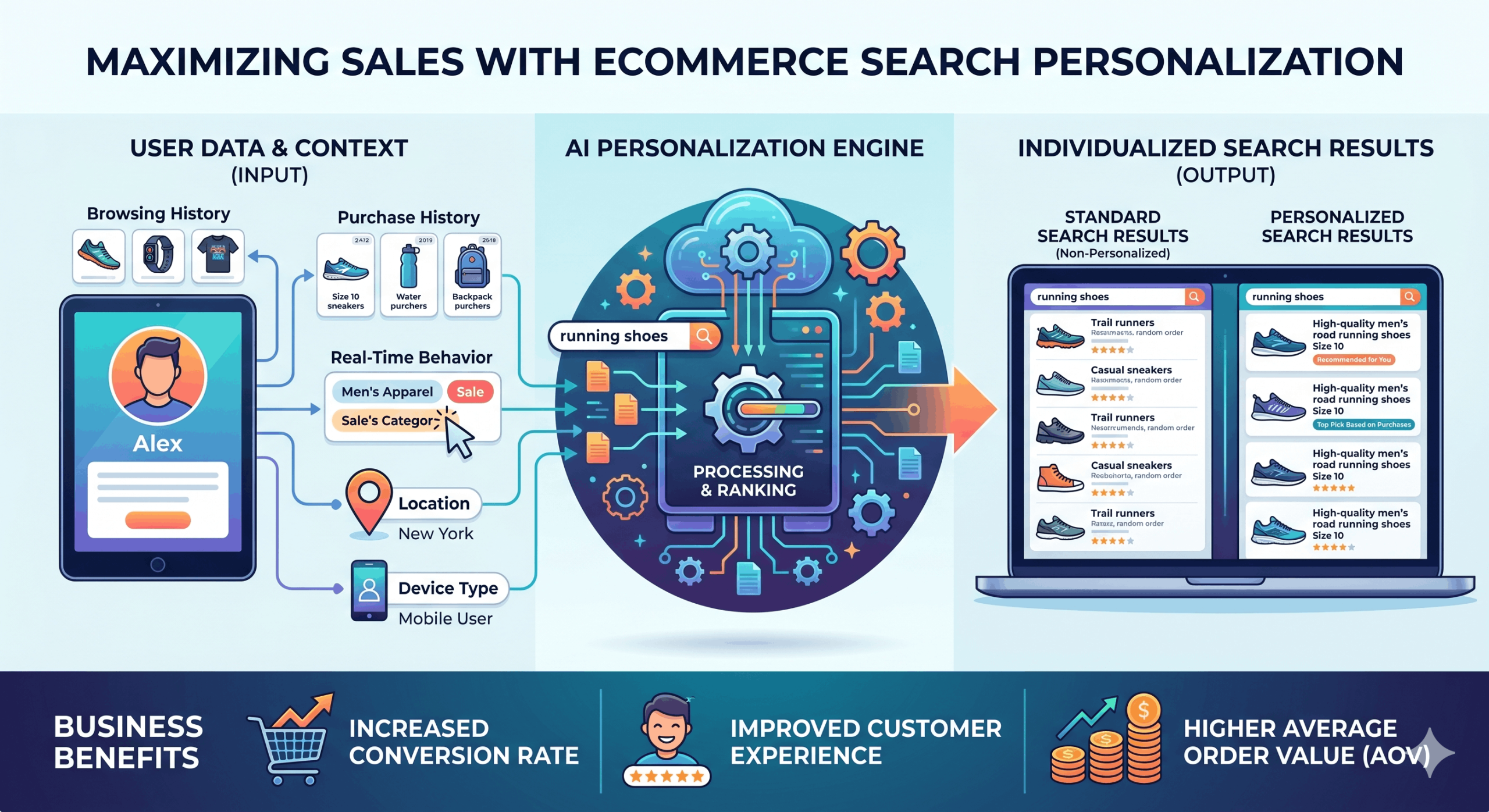
Enhancing Search Personalization
Search behavior often reveals immediate customer interests.
Personalized search systems can adapt results based on:
- Recent activity
- Category preferences
- Emerging interests
This helps customers find products that align with their current needs.
Dynamic Category Merchandising
Category pages often serve as major discovery destinations.
Personalization engines can:
- Reorder products
- Highlight relevant brands
- Promote preferred categories
These adjustments reflect changing customer interests in real time.
Supporting Cross-Category Discovery
Evolving preferences often lead customers into new product categories.
Personalization helps retailers identify these opportunities and introduce relevant products beyond a customer’s historical purchasing patterns.
This supports both customer satisfaction and revenue growth.
Responding to Seasonal Preference Changes
Customer interests often change throughout the year.
Examples include:
- Holiday shopping
- Back-to-school purchases
- Summer travel products
- Seasonal apparel
Personalization engines incorporate seasonal context to improve relevance.
This ensures recommendations remain timely.
Adapting Promotional Experiences
Customers respond differently to promotions as their preferences evolve.
Modern personalization systems can determine:
- Which offers are most relevant
- Which products should be promoted
- When promotions should be delivered
This improves engagement and conversion rates.
Supporting Omnichannel Customer Journeys
Customer preference changes often occur across multiple touchpoints.
Examples include:
- Websites
- Mobile applications
- Email campaigns
- Loyalty platforms
- Physical stores
Personalization systems that unify data across channels can detect evolving preferences more effectively.
This creates more consistent experiences.
The Role of Customer Data Platforms
Customer Data Platforms (CDPs) provide the foundation for adaptive personalization.
A CDP consolidates information from:
- Ecommerce platforms
- CRM systems
- Loyalty programs
- Mobile apps
- Customer service interactions
Unified customer profiles help retailers understand both historical and current behavior.
This improves personalization accuracy.
Predictive Personalization
Advanced personalization increasingly focuses on anticipating future customer interests.
Predictive models can identify:
- Likely product preferences
- Emerging shopping patterns
- Cross-sell opportunities
- Churn risks
These insights help retailers engage customers proactively.
Benefits of Personalization for Evolving Preferences
Improved Customer Relevance
Experiences reflect current interests rather than outdated assumptions.
Better Product Discovery
Customers find products aligned with emerging needs.
Higher Engagement Rates
Relevant experiences encourage interaction.
Increased Conversion Rates
Customers are more likely to purchase products that match their current intent.
Greater Customer Loyalty
Adaptive experiences strengthen relationships.
Higher Customer Lifetime Value
Retailers capture more long-term revenue opportunities.
Common Challenges Retailers Face
Rapid Preference Changes
Customer interests can shift quickly.
Data Fragmentation
Customer information may reside across multiple systems.
Large Product Catalogs
Maintaining relevance becomes more difficult as assortments expand.
Real-Time Decision Requirements
Personalization must occur instantly to remain effective.
Addressing these challenges is critical for success.
Best Practices for Adaptive Ecommerce Personalization
Prioritize Real-Time Behavioral Data
Current actions often provide the strongest indicators of intent.
Combine Historical and Current Signals
Balance long-term preferences with emerging interests.
Leverage AI and Machine Learning
Automation improves adaptability and accuracy.
Use Unified Customer Profiles
Comprehensive customer data strengthens decision-making.
Continuously Optimize Personalization Strategies
Customer behavior evolves and personalization should evolve alongside it.
Key Metrics to Track
Organizations should monitor:
- Recommendation engagement rates
- Conversion rates
- Customer retention rates
- Product discovery metrics
- Revenue per visitor
- Repeat purchase rates
- Customer lifetime value
These metrics help evaluate personalization effectiveness.
Conclusion
Customer preferences are constantly evolving, making static personalization approaches increasingly ineffective. While historical customer data remains valuable, retailers must also understand what customers are interested in right now and anticipate where those interests may shift in the future.
Ecommerce personalization provides the tools needed to adapt to these changing behaviors. By leveraging real-time customer signals, AI-powered analytics, predictive modeling, recommendation engines, and unified customer profiles, retailers can create dynamic experiences that remain relevant as customer preferences evolve.
As customer expectations continue to grow and competition intensifies, businesses that successfully adapt personalization strategies to changing shopper behavior will be better positioned to improve engagement, drive conversions, strengthen loyalty, and achieve long-term growth.













Leave a Reply