
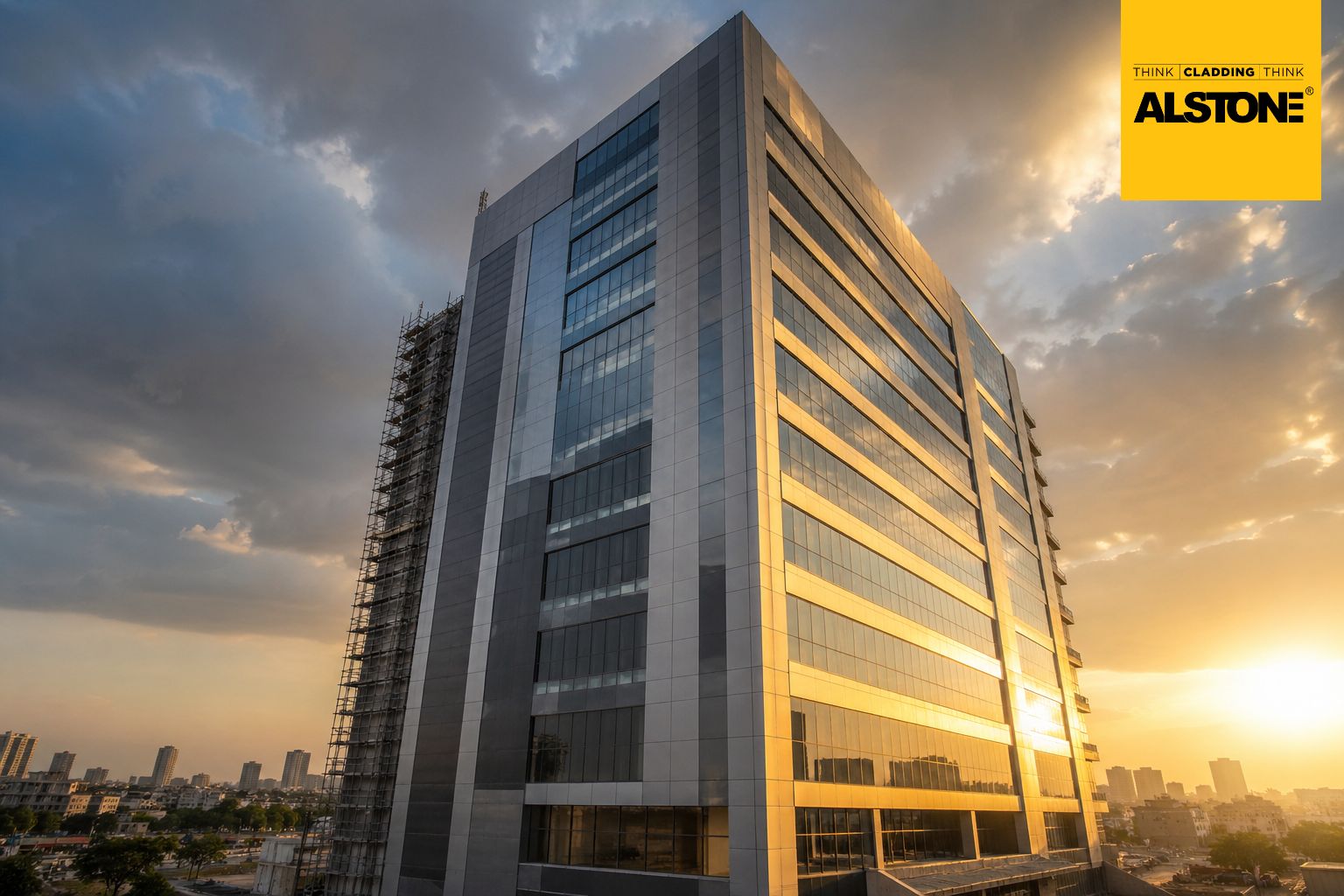
The best ACP sheet cladding in India in 2026 is defined by PVDF-coated, fire-retardant mineral-core aluminium composite panels that meet IS 15183 fire-rating standards, deliver UV-resistant performance across India’s extreme climates, and are manufactured domestically with certified quality benchmarks. For any commercial, institutional, or high-rise residential project, these are the non-negotiable characteristics that separate a premium facade from an average one.
Imagine a project lead in Hyderabad, standing before the structural skeleton of a twenty-storey IT park in the peak of 2026’s summer. The heat is unrelenting and monsoon clouds are already gathering. For this developer, the facade is not merely visual — it is the building’s first line of defence and its public identity. Cladding selection is no longer picking a colour from a catalogue — it is a critical engineering decision. With India’s construction industry projected to become the world’s third largest by 2025, contributing over $640 billion to the economy, the materials specified today will define skylines for decades. ACP sheet cladding has evolved from a stylistic choice into a high-performance architectural essential.
What Makes ACP Sheet Cladding the Right Choice in India
India’s diverse climate demands materials that withstand 45°C Delhi summers and the torrential rains of the Western Ghats simultaneously. Aluminium composite panels offer an ideal balance of lightweight efficiency and long-term durability. Unlike heavy masonry or stone, ACP significantly reduces dead load on high-rise structures — vital for seismic stability across many Indian regions. Modern panels resist corrosion even in the salt-laden humidity of coastal cities like Chennai and Mumbai. The year 2026 marks a decisive shift in fire safety compliance. With stricter adherence to IS 15183 and international fire-rating standards, ACP is now trusted by architects who must prioritise occupant safety without compromising the sleek, contemporary aesthetic that India’s commercial real estate demands.
Key Quality Parameters to Look for in 2026
Evaluating premium ACP panels requires looking far beneath the surface finish. For Indian building exteriors, PVDF (Polyvinylidene Fluoride) or FEVE coatings are non-negotiable — polyester alternatives cannot withstand prolonged UV exposure without fading or chalking. Core composition is the real differentiator. The industry has moved decisively past the combustible LDPE core era; the gold standard today is a non-combustible or fire-retardant mineral core. For external cladding, a 4mm panel with a minimum 0.5mm aluminium skin provides the rigidity needed to prevent oil-canning or buckling under wind pressure.
Consider a developer cladding a twelve-storey commercial complex in coastal Visakhapatnam. Beyond PVDF coating selection, a seasoned consultant would specify panels with certified peel strength and salt spray resistance ratings to combat the marine environment. The choice between cassette and reveal joint systems — each influencing drainage performance and visual rhythm — would further define the facade’s long-term integrity. These nuances separate a facade lasting thirty years from one that fails in five.
Trends Shaping ACP Cladding in India This Year
India’s architectural landscape in 2026 is embracing biophilic design, with ACP finishes replicating natural wood and stone textures to soften the glass-heavy urban fabric. There is a clear shift away from high-gloss surfaces toward matte and brushed metal finishes that handle glare more effectively in our intense climate. Large-format panels are now the preferred choice, creating seamless, monolithic facades that communicate premium quality through minimal joints. This shift is powered by India’s infrastructure push, including over 100 active smart city projects where design innovation has become a civic differentiator. Eco-conscious manufacturing is mainstream — architects now routinely specify panels with recycled aluminium content to meet LEED or IGBC green building certifications. Cool facade technology, which integrates thermal insulation directly into the panel system, is also gaining traction across India’s commercial sector.
Why Sourcing from Indian Manufacturers Is a Smart Move
India now hosts world-class manufacturing facilities that rival any global competitor. Sourcing locally ensures faster project lead times, GST-compliant pricing, and immediate on-site technical support during installation. A particular homegrown Indian brand has spent decades refining the cladding industry, setting the benchmark for quality, finish variety, and manufacturing innovation. This industry leader brings the localised expertise Indian sites demand — from wind load calculations in cyclone-prone coastal zones to managing thermal expansion across the northern plains. It has quietly become the backbone of many of India’s most iconic commercial landmarks, proving that domestic excellence is now fully synonymous with global reliability.
Application Spotlight: Where ACP Cladding Shines
ACP cladding consistently performs across India’s most demanding sectors. Corporate facades benefit from a refined finish that expresses brand modernity. Retail storefronts leverage its versatility for bold graphics and complex geometric forms. Hospital exteriors value ease of maintenance and hygienic surface properties. Metro stations and airport terminals depend on its durability under high footfall and constant exposure. In residential high-rises, ACP elevates balconies and accent elements, sustaining long-term market value with minimal upkeep.
Build for the Long Term
As India’s construction sector accelerates through 2026, facade evaluation must shift from procurement cost to lifecycle value. For architects, builders, and project managers, the goal is structures that age gracefully, safely, and sustainably. Assess your next cladding choice on performance testing data, warranty terms, and after-installation support quality. A facade is not a line item on a bill of materials — it is a commitment to a building’s legacy and its occupants’ safety. Choose a partner who understands the demands of the Indian environment and stands completely behind the integrity of their product. Let us build an India that is not only visually compelling but resilient and safe for the generations who will inherit it.
Frequently Asked Questions
Q1. What is the best type of ACP sheet for building exteriors in India? A 4mm PVDF-coated panel with a fire-retardant mineral core that meets IS 15183 standards is the best choice for Indian building exteriors in 2026.
Q2. What is the difference between PVDF and polyester coating in ACP sheets? PVDF coating offers 20+ years of UV and weather resistance for exteriors, while polyester coating is suitable only for interiors or low-exposure applications.
Q3. Is ACP cladding fire-safe for high-rise buildings in India? Yes — ACP sheets with a non-combustible or FR mineral core comply with IS 15183 and are fire-safe for high-rise and commercial buildings in India.
Q4. How much does ACP cladding cost per square foot in India in 2026? Premium PVDF-coated, FR-core ACP panels from Indian manufacturers typically cost between ₹120 to ₹250 per square foot, excluding installation and fabrication.
Q5. How long does ACP sheet cladding last on Indian buildings? A properly installed premium ACP cladding system with PVDF coating and a mineral core lasts 25 to 30 years on Indian buildings with minimal maintenance.











Leave a Reply